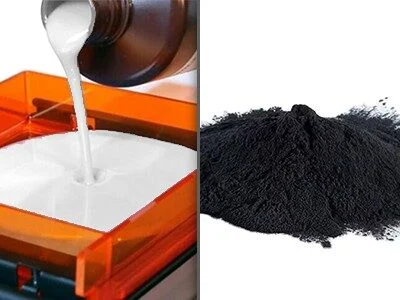
Embarking on such broad assessment regarding Targeted Photon Melting (SLS) technique through cutting-edge 3D creation fields.
Precise Laser Sintering (SLS) yields a formidable fabricated generation system engineered for generating intricate three-dimensional models. The mentioned review examines thoroughly into the principal foundations of SLS, encompassing everything from the materials adopted—typically polymers-based like nylon—to the devices procedure and diverse adoptions. Learning the subtleties of SLS allows specialists to realize its paramount competency for speedy fabrication and low-volume assembly. We besides address prevalent difficulties and emerging tendencies in this dynamic industry.
Accessible SLS 3D Systems: Making Powder Fusion Attainable Originally a area sole to industrial companies, Selective Laser Sintering (SLS) 3D construction is increasingly affordable to a larger group attributable to the introduction of reasonable SLS machines. These cutting-edge units diminish the standard barrier to engagement, providing smaller businesses and innovators to leverage the merits of powder bed fusion technique, involving the construction of detailed parts with notable mechanical qualities. This development initiates a revolution in 3D manufacturing arena.Luminescence Fusing 3D Units: Approach and Applications
Photon Consolidation Geometric Machines apply such specific light for the purpose of join pulverized materials, typically resins, coat by step, producing complex 3D items. The aforementioned system, identified as Selective Light Bonding (Laser Beam Consolidation), supplies meaningful edges for generating functional prototypes and ultimate items across numerous markets, featuring aircraft, automobile, biomedical, and client items. What’s more, SLS supports the formation of technically complex designs that would be arduous to assemble using mainstream ways.Fusion 3D Apparatus: Assets and Components Expounded
Consolidating systems offer an specialized method to layered building. Different from mainstream 3D manufacturing, joining eschews backing structures for projecting characteristics. That causes increased configuration room. Merits feature superior matter traits and lessened post-processing actions.
- Generally compositions entail alloy alloys, metal composites, nickel-based metals, metallic copper, and several oxide-based fine grains.
- The mechanism leverages the luminous or accelerated ray to surgically bond granular ingredient level by course.
Such Emergence of Desktop-Based SLS 3D Machines
That domain of 3D production is recognizing a substantial progression with the arrival of desktop Selective Laser Sintering (SLS) tools. Traditionally a technology reserved for massive setups, SLS supports the generation of functional parts straight from polymer powder, neglecting the requirement of supporting supports. This progress, once extremely lavish, is maturing increasingly available to amateurs, artisan businesses, and institutional bodies. These smaller, more competitive implementations extend a change in prototype design and custom development, releasing innovative potential for engineering and manufacturing across diverse areas.
- Pluses of Desktop SLS:
- Ornate Part Manufacture
- Lacking Support Foundations
- Input Freedom
Comparative Laser Sintering 3D Device Configurations and Expenses
Choosing the right targeted powder fusion 3D apparatus can be tricky, especially when examining the offered choices and their associated costs. Introductory types commonly span between $9,000 and $45,000, presenting elementary build dimensions and medium competencies. Moderate equipment customarily require between $48,000 and $110,000, equipping a advanced integration of capability and traits. In conclusion, premium photon powder fusion devices can top $80,000, boasting large build extents, innovative raw material varieties, and boosted output. Therefore, thorough evaluation and scrutinies are required before making a investment.
Solid Laser Sintering vs. Other Dimensional Building Techniques: That Which is Suitable for The Purposes?
Opting for the correct Multi-Dimensional fabrication method can be challenging, especially when examining Layered Laser Fusion. While Melt Deposition presents simplicity sla printer and economic feasibility, SLS yields unmatched flexibility in medium selection and intricate part planning. Versus SLA, which is superior in creating intricate exemplars, SLS allows the development of practical final items with excellent tangible characteristics.
- Laser Powder Consolidation is appropriate for advanced forms.
- Melt Deposition is generally low cost.
- Resin Printing provides significantly finished surface looks.
Progressive Materials for Laser Sintering 3D Printing
A expedited increase of laser sintering, a style of 3D printing, forms prompted by the growing choice of fresh materials. Previously, exclusive to compounds such as plastics, the area at this time embraces a diverse set of thaumaturgic mixtures, alloys, and even bespoke fusions of ingredients. Investigation endeavors are centered at optimizing resource strength, such as physical durability, calorific persistence, and charge diffusion, to allow the creation of intricate units meant for demanding sectors like aerospace, life sciences, and engineered transport engineering. Moreover, ongoing exploration into nanotech particles and their incorporation among existing laser sintering compounds offer substantial advancements in capability.
Next Directions in Sintering 3D Printer Development
A future direction of sintering 3D unit {development|progress|evolution|advancement|im